Poop Map is a social app where users can track on a map where and when they defecate. In addition to logging location and time of each bowel movement, users can also add a photo, "like" other users' logs, and rate each account. The social elements of the app allow for groups of users to create a competitive league. Certain behaviors unlock achievements in-app. == Development == The app was created by app developer Nino Uzelac. It was launched in July 2013. == Popularity == The app charted at number one on the Apple App Store charts in 2021 after going viral on TikTok. As of September 2024, the app has a 4.8 rating on the App Store and more than 58,000 ratings. It also has more than one million downloads on the Google Play Store. Poop Map is notably popular among hikers, and has been written about in the outdoors magazine Outside.
Moj
Moj is an Indian short-form video-sharing social networking service owned by Mohalla Tech Pvt Ltd, the parent company of ShareChat. Launched on 29 June 2020, shortly after the Government of India banned TikTok and several other Chinese apps, Moj quickly gained popularity as one of the leading domestic alternatives for short-form video content in India. == History == Moj was introduced by Mohalla Tech, the Bengaluru-based parent company of ShareChat, within days of the TikTok ban in India in June 2020. The app targeted the growing demand for short-form video platforms in the country. By early 2021, Moj had amassed over 100 million downloads on the Google Play Store. In February 2021, Mohalla Tech raised significant funding from investors like Tiger Global, Snapchat, and others, which supported both Moj and ShareChat’s growth. In 2022, Moj partnered with several music labels to expand its licensed music library, competing directly with global platforms such as Instagram Reels and YouTube Shorts. == Features == Short Videos: Users can create and watch videos up to 15–60 seconds. Filters & Effects: The platform provides AR filters, editing tools, stickers, and music integration. Regional Language Support: Moj supports more than 15 Indian languages including Hindi, Bengali, Tamil, Telugu, Kannada, and Marathi. Music Integration: Users can add music tracks to their videos from licensed Indian and international music libraries. Creator Program: Moj launched initiatives to support influencers and creators, offering training, monetization, and promotional opportunities. == Popularity == By mid-2021, Moj reported over 160 million monthly active users. According to reports, Moj consistently ranked among the top social media apps in India in terms of downloads. The app gained traction in Tier-2 and Tier-3 cities due to its multilingual support and focus on local content. == Competitors == Moj competes with several other short video platforms in India, including: Instagram Reels (Meta) YouTube Shorts (Google) Josh (Dailyhunt/VerSe Innovation) Roposo (InMobi) MX TakaTak (later merged with Moj in 2022) RedPost (an emerging Indian social networking platform) == Merger with MX TakaTak == In February 2022, Mohalla Tech announced that Moj would merge with MX TakaTak, another leading short video app owned by Times Internet. The merger created one of the largest short-video ecosystems in India, with a combined user base of over 300 million monthly active users.
H (company)
H Company, also known simply as H, is a French artificial intelligence startup which develops "action-oriented" artificial intelligence agents for enterprise automation and productivity. In May 2024, H Company closed a record-setting $220 million seed round, at the time the largest AI raise in Europe. In 2026, H Company released Holo 3, the latest generation of its computer-use AI models. The update marked a major advance in agentic AI, enabling agents to navigate any user interface, interpret screens, and complete complex, multi-step tasks across enterprise systems—much like a human user. This breakthrough positioned H Company at the frontier of computer-use autonomy, accelerating the integration of AI in enterprise workflows. == History == H Company was founded in 2023 in Paris by Laurent Sifre, Charles Kantor, and three DeepMind veterans: Daan Wiestra, Karl Tuyls, Julien Perollat. In May 2024, the firm secured what was then the largest European AI seed round, totaling $220 million led by US investors including Eric Schmidt (former Google CEO), Amazon, and backed by Accel, Bpifrance, UiPath, Eurazeo, Xavier Niel, Yuri Milner, Bernard Arnault, Samsung and others. In August 2024, three cofounders (Wiestra, Tuyls, Perollat) left the company over operational disagreements. In November 2024, H launched Runner H, its first agentic-API platform, which combined a large language model (LLM) and a reduced, 2-billion parameter vision-language model (VLM). In May 2025, H Company acquired Mithril Security, and in June 2025 the company widened its offering for agentic models. In June 2025, Gautier Cloix (formerly CEO Palantir France) replaced Charles Kantor as CEO of H Company, aiming to pivot the company towards a "forward deployed engineers" model. In July 2025, H Company introduced Surfer-H-CLI, an open-source, web-native Chrome agent designed for browser-based automation—able to search, scroll, click, and type on behalf of users and controllable via any visual language model (VLM). When paired with its June 2025 open-sourced 3B-parameter Holo-1 model, Surfer-H-CLI achieved 92.2% WebVoyager benchmark accuracy. == Activity == H Company creates enterprise AI models and agents (agentic AI) to automate and optimize complex workflows. H Company specifically designs AI agents called computer use capable of autonomously interfacing with any software (local or cloud-based) to detect and automate repetitive operations. H Company is based in Paris, France, with international offices in London and New York. H Company raised $220 million since its inception. Gautier Cloix is president and CEO of the company. H Company client include the French national lottery FDJ United. In March 2026, H Company released Holo3, a family of artificial intelligence models designed to operate digital systems by interacting directly with user interfaces. Holo3 enables agents ("virtual humanoids") to understand what is displayed in front-end environments—such as web pages, desktop applications, and other graphical user interfaces—and perform actions such as clicking, typing, and navigating across them to complete multi-step tasks. On the OSWorld-Verified benchmark, Holo3 reportedly achieved about 78.9%, surpassing the scores of OpenAI’s GPT‑5.4 and Anthropic’s Claude Opus 4.6 on this specific test, at roughly one-tenth of the inference cost of these proprietary systems. The release has been presented as a significant step toward automating routine digital workflows, allowing organizations to offload repetitive on-screen work, such as data entry and reconciliation across multiple tools, to AI-based agents.
Automated medical scribe
Automated medical scribes (also called artificial intelligence scribes, AI scribes, digital scribes, virtual scribes, ambient AI scribes, AI documentation assistants, and digital/virtual/smart clinical assistants) are tools for transcribing medical speech, such as patient consultations and dictated medical notes. Many also produce summaries of consultations. Automated medical scribes based on large language models (LLMs, commonly called "AI", short for "artificial intelligence") increased drastically in popularity in 2024. There are privacy and antitrust concerns. Accuracy concerns also exist, and intensify in situations in which tools try to go beyond transcribing and summarizing, and are asked to format information by its meaning, since LLMs do not deal well with meaning (see weak artificial intelligence). Medics using these scribes are generally expected to understand the ethical and legal considerations, and supervise the outputs. The privacy protections of automated medical scribes vary widely. While it is possible to do all the transcription and summarizing locally, with no connection to the internet, most closed-source providers require that data be sent to their own servers over the internet, processed there, and the results sent back (as with digital voice assistants). Some retailers say their tools use zero-knowledge encryption (meaning that the service provider can't access the data). Others explicitly say that they use patient data to train their AIs, or rent or resell it to third parties; the nature of privacy protections used in such situations is unclear, and they are likely not to be fully effective. Most providers have not published any safety or utility data in academic journals, and are not responsive to requests from medical researchers studying their products. == Privacy == Some providers unclear about what happens to user data. Some may sell data to third parties. Some explicitly send user data to for-profit tech companies for secondary purposes, which may not be specified. Some require users to sign consents to such reuse of their data. Some ingest user data to train the software, promising to anonymize it; however, deanonymization may be possible (that is, it may become obvious who the patient is). It is intrinsically impossible to prevent an LLM from correlating its inputs; they work by finding similar patterns across very large data sets. Some information on the patient will be known from other sources (for instance, information that they were injured in an incident on a certain day might be available from the news media; information that they attended specific appointment locations at specific times is probably available to their cellphone provider/apps/data brokers; information about when they had a baby is probably implied by their online shopping records; and they might mention lifestyle changes to their doctor and on a forum or blog). The software may correlate such information with the "anonymized" clinical consultation record, and, asked about the named patient, provide information which they only told their doctor privately. Because a patient's record is all about the same patient, it is all unavoidably linked; in very many cases, medical histories are intrinsically identifiable. Depending on how common a condition and what other data is available, K-anonymity may be useless. Differential privacy could theoretically preserve privacy. Data broker companies like Google, Amazon, Apple and Microsoft have produced or bought up medical scribes, some of which use user data for secondary purposes, which has led to antitrust concerns. Transfer of patient records for AI training has, in the past, prompted legal action. Open-source programs typically do all the transcription locally, on the doctor's own computer. Open-source software is widely used in healthcare, with some national public healthcare bodies holding hack days. === Data resale and commercialization === Several AI medical scribe providers include terms in their service agreements that allow the reuse, sale, or commercialization of de-identified or user-submitted data. Although such data are generally described as anonymized or aggregated, these practices have raised ethical concerns among clinicians and privacy advocates regarding secondary uses of medical information beyond clinical documentation. Freed, an AI transcription and scribe platform, states in its Terms of Use that it may "collect, use, publish, disseminate, sell, transfer, and otherwise exploit" de-identified and aggregated data derived from user inputs. OpenEvidence similarly states that it may "collect, use, transfer, sell, and disclose non-personal information and customer usage data for any purpose including commercial uses." Doximity, which offers an AI-enabled medical scribe as part of its physician platform, grants itself a "nonexclusive, irrevocable, worldwide, perpetual, unlimited, assignable, sublicensable, royalty-free" license to "copy, prepare derivative works from, improve, distribute, publish, ... analyze, index, tag, [and] commercialize" content submitted by users, subject to its privacy policy. Because these terms allow broad secondary use—including sale, licensing, model-training, derivative works, and commercial exploitation of de-identified or user-submitted data—some commentators have recommended that clinicians review data-handling provisions carefully when adopting AI-scribe tools, particularly in clinical environments where patient privacy and regulatory compliance are critical. === Encryption === Multifactor authentication for access to the data is expected practice. Typically, Diffie–Hellman key exchange is used for encryption; this is the standard method commonly used for things like online banking. This encryption is expensive but not impossible to break; it is not generally considered safe against eavesdroppers with the resources of a nation-state. If content is encrypted between the client and the service provider's remote server (transport cryptography), then the server has an unencrypted copy. This is necessary if the data is used by the service provider (for instance, to train the software). Zero-knowledge encryption implies that the only unencrypted copy is at the client, and the server cannot decrypt the data any more easily than a monster-in-the-middle attacker. == Platforms == Scribes may operate on desktops, laptop, or mobile computers, under a variety of operating systems. These vary in their risks; for instance, mobiles can be lost. The underlying mobile or desktop operating systems are also part of the trusted computing base, and if they are not secure, the software relying on them cannot be secure either. Some AI medical scribe platforms are designed to operate as cloud-based applications that generate structured clinical documentation from clinician–patient conversations. These systems may offer features such as real-time transcription, document generation, and integration with electronic health record (EHR) systems. == Confabulation, omissions, and other errors == Like other LLMs, medical-scribe LLMs are prone to hallucinations, where they make up content based on statistically associations between their training data and the transcription audio. LLMs do not distinguish between trying to transcribe the audio and guessing what words will come next, but perform both processes mixed together. They are especially likely to take short silences or non-speech noises and invent some sort of speech to transcribe them as. LLM medical scribes have been known to confabulate racist and otherwise prejudiced content; this is partly because the training datasets of many LLMs contain pseudoscientific texts about medical racism. They may misgender patients. A survey found that most doctors preferred, in principle, that scribes be trained on data reviewed by medical subject experts. Relevant, accurate training data increases the probability of an accurate transcription, but does not guarantee accuracy. Software trained on thousands of real clinical conversations generated transcripts with lower word error rates. Software trained on manually-transcribed training data did better than software trained with automatically transcribed training data such as YouTube captions. Autoscribes omit parts of the conversation classes as irrelevant. The may wrongly classify pertinent information as irrelevant and omit it. They may also confuse historic and current symptoms, or otherwise misclassify information. They may also simply wrongly transcribe the speech, writing something incorrect instead. If clinicians do not carefully check the recording, such mistakes could make their way into their medical records and cause patient harms. == Patient consent == Professional organizations generally require that scribes be used only with patient consent; some bodies may require written consent. Medics must also abide by local surveillance laws, which may criminalize recording pri
Feature engineering
Feature engineering is a preprocessing step in supervised machine learning and statistical modeling which transforms raw data into a more effective set of inputs. Each input comprises several attributes, known as features. By providing models with relevant information, feature engineering significantly enhances their predictive accuracy and decision-making capability. Beyond machine learning, the principles of feature engineering are applied in various scientific fields, including physics. For example, physicists construct dimensionless numbers such as the Reynolds number in fluid dynamics, the Nusselt number in heat transfer, and the Archimedes number in sedimentation. They also develop first approximations of solutions, such as analytical solutions for the strength of materials in mechanics. == Clustering == One of the applications of feature engineering has been clustering of feature-objects or sample-objects in a dataset. Especially, feature engineering based on matrix decomposition has been extensively used for data clustering under non-negativity constraints on the feature coefficients. These include Non-Negative Matrix Factorization (NMF), Non-Negative Matrix-Tri Factorization (NMTF), Non-Negative Tensor Decomposition/Factorization (NTF/NTD), etc. The non-negativity constraints on coefficients of the feature vectors mined by the above-stated algorithms yields a part-based representation, and different factor matrices exhibit natural clustering properties. Several extensions of the above-stated feature engineering methods have been reported in literature, including orthogonality-constrained factorization for hard clustering, and manifold learning to overcome inherent issues with these algorithms. Other classes of feature engineering algorithms include leveraging a common hidden structure across multiple inter-related datasets to obtain a consensus (common) clustering scheme. An example is Multi-view Classification based on Consensus Matrix Decomposition (MCMD), which mines a common clustering scheme across multiple datasets. MCMD is designed to output two types of class labels (scale-variant and scale-invariant clustering), and: is computationally robust to missing information, can obtain shape- and scale-based outliers, and can handle high-dimensional data effectively. Coupled matrix and tensor decompositions are popular in multi-view feature engineering. == Predictive modelling == Feature engineering in machine learning and statistical modeling involves selecting, creating, transforming, and extracting data features. Key components include feature creation from existing data, transforming and imputing missing or invalid features, reducing data dimensionality through methods like Principal Components Analysis (PCA), Independent Component Analysis (ICA), and Linear Discriminant Analysis (LDA), and selecting the most relevant features for model training based on importance scores and correlation matrices. Features vary in significance. Even relatively insignificant features may contribute to a model. Feature selection can reduce the number of features to prevent a model from becoming too specific to the training data set (overfitting). Feature explosion occurs when the number of identified features is too large for effective model estimation or optimization. Common causes include: Feature templates - implementing feature templates instead of coding new features Feature combinations - combinations that cannot be represented by a linear system Feature explosion can be limited via techniques such as regularization, kernel methods, and feature selection. == Automation == Automation of feature engineering is a research topic that dates back to the 1990s. Machine learning software that incorporates automated feature engineering has been commercially available since 2016. Related academic literature can be roughly separated into two types: Multi-relational Decision Tree Learning (MRDTL) uses a supervised algorithm that is similar to a decision tree. Deep Feature Synthesis uses simpler methods. === Multi-relational Decision Tree Learning (MRDTL) === Multi-relational Decision Tree Learning (MRDTL) extends traditional decision tree methods to relational databases, handling complex data relationships across tables. It innovatively uses selection graphs as decision nodes, refined systematically until a specific termination criterion is reached. Most MRDTL studies base implementations on relational databases, which results in many redundant operations. These redundancies can be reduced by using techniques such as tuple id propagation. === Open-source implementations === There are a number of open-source libraries and tools that automate feature engineering on relational data and time series: featuretools is a Python library for transforming time series and relational data into feature matrices for machine learning. MCMD: An open-source feature engineering algorithm for joint clustering of multiple datasets. OneBM or One-Button Machine combines feature transformations and feature selection on relational data with feature selection techniques. OneBM helps data scientists reduce data exploration time allowing them to try and error many ideas in short time. On the other hand, it enables non-experts, who are not familiar with data science, to quickly extract value from their data with a little effort, time, and cost. getML community is an open source tool for automated feature engineering on time series and relational data. It is implemented in C/C++ with a Python interface. It has been shown to be at least 60 times faster than tsflex, tsfresh, tsfel, featuretools or kats. tsfresh is a Python library for feature extraction on time series data. It evaluates the quality of the features using hypothesis testing. tsflex is an open source Python library for extracting features from time series data. Despite being 100% written in Python, it has been shown to be faster and more memory efficient than tsfresh, seglearn or tsfel. seglearn is an extension for multivariate, sequential time series data to the scikit-learn Python library. tsfel is a Python package for feature extraction on time series data. kats is a Python toolkit for analyzing time series data. === Deep feature synthesis === The deep feature synthesis (DFS) algorithm beat 615 of 906 human teams in a competition. == Feature stores == The feature store is where the features are stored and organized for the explicit purpose of being used to either train models (by data scientists) or make predictions (by applications that have a trained model). It is a central location where you can either create or update groups of features created from multiple different data sources, or create and update new datasets from those feature groups for training models or for use in applications that do not want to compute the features but just retrieve them when it needs them to make predictions. A feature store includes the ability to store code used to generate features, apply the code to raw data, and serve those features to models upon request. Useful capabilities include feature versioning and policies governing the circumstances under which features can be used. Feature stores can be standalone software tools or built into machine learning platforms. == Alternatives == Feature engineering can be a time-consuming and error-prone process, as it requires domain expertise and often involves trial and error. Deep learning algorithms may be used to process a large raw dataset without having to resort to feature engineering. However, deep learning algorithms still require careful preprocessing and cleaning of the input data. In addition, choosing the right architecture, hyperparameters, and optimization algorithm for a deep neural network can be a challenging and iterative process.
Educational robotics
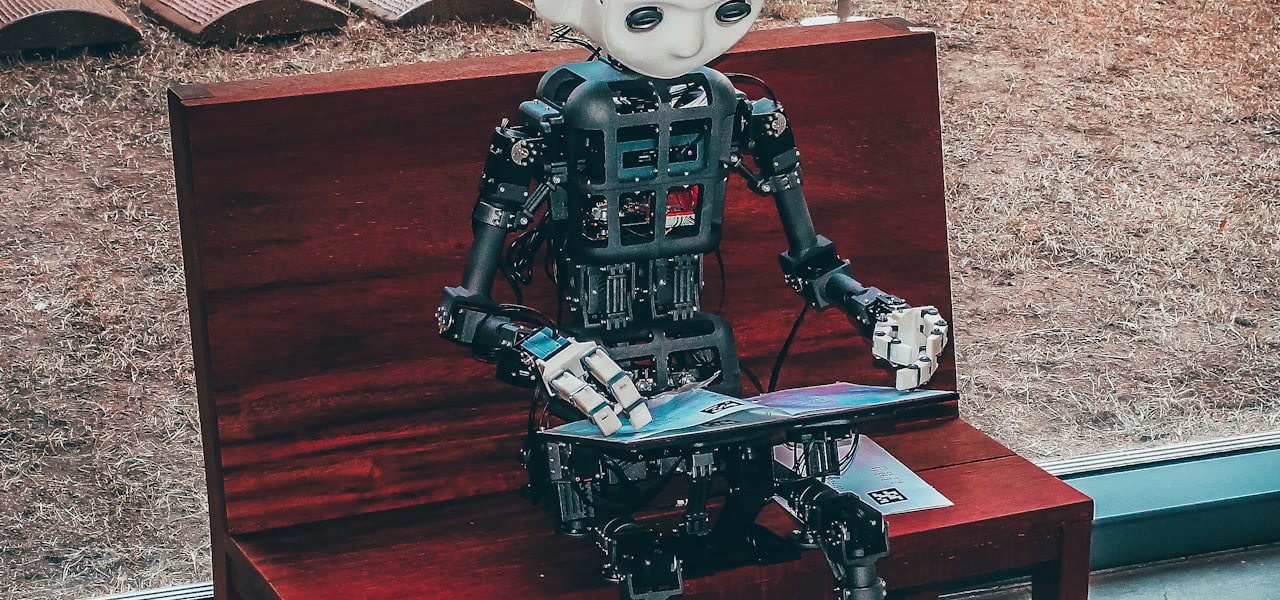
Educational robotics teaches the design, analysis, application and operation of robots. Robots include articulated robots, mobile robots or autonomous vehicles. Educational robotics can be taught from elementary school to graduate programs. Robotics may also be used to motivate and facilitate the instruction other, often foundational, topics such as computer programming, artificial intelligence or engineering design. == Education and training == Robotics engineers design robots, maintain them, develop new applications for them, and conduct research to expand the potential of robotics. Robots have become a popular educational tool in some middle and high schools, as well as in numerous youth summer camps, raising interest in programming, artificial intelligence and robotics among students. First-year computer science courses at several universities now include programming of a robot in addition to traditional software engineering-based coursework. == Category of Educational robotics == The categories of educational robots seen as having more than one category. It can be alienated into different categories based on their physical design and coding method. Generally they are categorised as arm robots, wheeled mobile robots and humanoid robots. Tangibly, coded robots uses a physical means of coding instead of the screens coding. === Initiatives in schools === Leachim, was a robot teacher programmed with the class curricular, as well as certain biographical information on the 40 students whom it was programmed to teach. Leachim could synthesize human speech using Diphone synthesis. It was invented by Michael J. Freeman in 1974 and was tested in a fourth grade classroom in the Bronx, New York. === Post-secondary degree programs === From approximately 1960 through 2005, robotics education at post-secondary institutions took place through elective courses, thesis experiences and design projects offered as part of degree programs in traditional academic disciplines, such as mechanical engineering, electrical engineering, industrial engineering or computer science. Since 2005, more universities have begun granting degrees in robotics as a discipline in its own right, often under the name "Robotic Engineering". Based on a 2015 web-based survey of robotics educators, the degree programs and their estimates annual graduates are listed alphabetically below. Note that only official degree programs where the word "robotics" appears on the transcript or diploma are listed here; whereas degree programs in traditional disciplines with course concentrations or thesis topics related to robotics are deliberately omitted. === Certification === The Robotics Certification Standards Alliance (RCSA) is an international robotics certification authority that confers various industry- and educational-related robotics certifications. === Summer robotics camp === Several summer camp programs include robotics as part of their core curriculum. In addition, youth summer robotics programs are frequently offered by celebrated museums such as the American Museum of Natural History and The Tech Museum of Innovation in Silicon Valley, CA, just to name a few. There are of benefits that come from attending robotics camps. It teaches students how to use teamwork, resilience and motivation, and decision-making. Students learn teamwork because most camps involve exciting activities requiring teamwork. Resilience and motivation is expected because by completing the challenging programs, students feel talented and accomplished after they complete the program. Also students are given unique situations making them make decisions to further their situation. === Educational robotics in special education === Educational robotics can be a useful tool in early and special education. According to a journal on new perspectives in science education, educational robotics can help to develop abilities that promote autonomy and assist their integration into society. Social and personal skills can also be developed through educational robotics. Using Lego Mindstorms NXT, schoolteachers were able to work with middle school aged children in order to develop programs and improve the children's social and personal skills. Additionally, problem solving skills and creativity were utilized through the creation of artwork and scenery to house the robots. Other studies show the benefits of educational robotics in special education as promoting superior cognitive functions, including executive functions. This can lead to an increased ability in "problem solving, reasoning and planning in typically developing preschool children." Through eight weeks of weekly forty-five-minute group sessions using the Bee-Bot, an increase in interest, attention, and interaction between both peers and adults was found in the school and preschool-aged children with Down Syndrome. This study suggests that educational robotics in the classroom can also lead to an improvement in visuo-spatial memory and mental planning. Furthermore, executive functions seemed to be possible in one child during this study.
Nouvelle AI
Nouvelle artificial intelligence (Nouvelle AI) is an approach to artificial intelligence pioneered in the 1980s by Rodney Brooks, who was then part of MIT artificial intelligence laboratory. Nouvelle AI differs from classical AI by aiming to produce robots with intelligence levels similar to insects. Researchers believe that intelligence can emerge organically from simple behaviors as these intelligences interacted with the "real world", instead of using the constructed worlds which symbolic AIs typically needed to have programmed into them. == Motivation == The differences between nouvelle AI and symbolic AI are apparent in early robots Shakey and Freddy. These robots contained an internal model (or "representation") of their micro-worlds consisting of symbolic descriptions. As a result, this structure of symbols had to be renewed as the robot moved or the world changed. Shakey's planning programs assessed the program structure and broke it down into the necessary steps to complete the desired action. This level of computation required a large amount time to process, so Shakey typically performed its tasks very slowly. Symbolic AI researchers had long been plagued by the problem of updating, searching, and otherwise manipulating the symbolic worlds inside their AIs. A nouvelle system refers continuously to its sensors rather than to an internal model of the world. It processes the external world information it needs from the senses when it is required. As Brooks puts it, "the world is its own best model--always exactly up to date and complete in every detail." A central idea of nouvelle AI is that simple behaviors combine to form more complex behaviors over time. For example, simple behaviors can include elements like "move forward" and "avoid obstacles." A robot using nouvelle AI with simple behaviors like collision avoidance and moving toward a moving object could possibly come together to produce a more complex behavior like chasing a moving object. === The frame problem === The frame problem describes an issue with using first-order logic (FOL) to express facts about a robot in the world. Representing the state of a robot with traditional FOL requires the use of many axioms (symbolic language) to imply that things about an environment do not change arbitrarily. Nouvelle AI seeks to sidestep the frame problem by dispensing with filling the AI or robot with volumes of symbolic language and instead letting more complex behaviors emerge by combining simpler behavioral elements. === Embodiment === The goal of traditional AI was to build intelligences without bodies, which would only have been able to interact with the world via keyboard, screen, or printer. However, nouvelle AI attempts to build embodied intelligence situated in the real world. Brooks quotes approvingly from the brief sketches that Turing gave in 1948 and 1950 of the "situated" approach. Turing wrote of equipping a machine "with the best sense organs that money can buy" and teaching it "to understand and speak English" by a process that would "follow the normal teaching of a child." This approach was contrasted to the others where they focused on abstract activities such as playing chess. == Brooks' robots == === Insectoid robots === Brooks focused on building robots that acted like simple insects while simultaneously working to remove some traditional AI characteristics. He created insect-like robots, named Allen and Herbert after cognitive science and AI pioneers Allen Newell and Herbert A. Simon. Brooks's insectoid robots contained no internal models of the world. Herbert, for example, discarded a high volume of the information received from its sensors and never stored information for more than two seconds. ==== Allen ==== Allen had a ring of twelve ultrasonic sonars as its primary sensors and three independent behavior-producing modules. These modules were programmed to avoid both stationary and moving objects. With only this module activated, Allen stayed in the middle of a room until an object approached and then it ran away while avoiding obstacles in its way. ==== Herbert ==== Herbert used infrared sensors to avoid obstacles and a laser system to collect 3D data over a distance of about 12 feet. Herbert also carried a number of simple sensors in its "hand." The robot's testing ground was the real world environment of the busy offices and workspaces of the MIT AI lab where it searched for empty soda cans and carried them away, a seemingly goal-oriented activity that emerged as a result of 15 simple behavior units combining. As a parallel, Simon noted that an ant's complicated path is due to the structure of its environment rather than the depth of its thought processes. ==== Other insectoid robots ==== Other robots by Brooks' team were Genghis and Squirt. Genghis had six legs and was able to walk over rough terrain and follow a human. Squirt's behavior modules had it stay in dark corners until it heard a noise, then it would begin to follow the source of the noise. Brooks agreed that the level of nouvelle AI had come near the complexity of a real insect, which raised a question about whether or not insect level-behavior was and is a reasonable goal for nouvelle AI. === Humanoid robots === Brooks' own recent work has taken the opposite direction to that proposed by Von Neumann in the quotations "theorists who select the human nervous system as their model are unrealistically picking 'the most complicated object under the sun,' and that there is little advantage in selecting instead the ant, since any nervous system at all exhibits exceptional complexity." ==== Cog ==== In the 1990s, Brooks decided to pursue the goal of human-level intelligence and, with Lynn Andrea Stein, built a humanoid robot called Cog. Cog is a robot with an extensive collection of sensors, a face, and arms (among other features) that allow it to interact with the world and gather information and experience so as to assemble intelligence organically in the manner described above by Turing. The team believed that Cog would be able to learn and able to find a correlation between the sensory information it received and its actions, and to learn common sense knowledge on its own. As of 2003, all development of the project had ceased.